Blackjack Room Dynamics: Recalibrating Bets for Continuous Shuffle Machines and Shoe Games
Written by Paul Franke · Jul 28, 2026
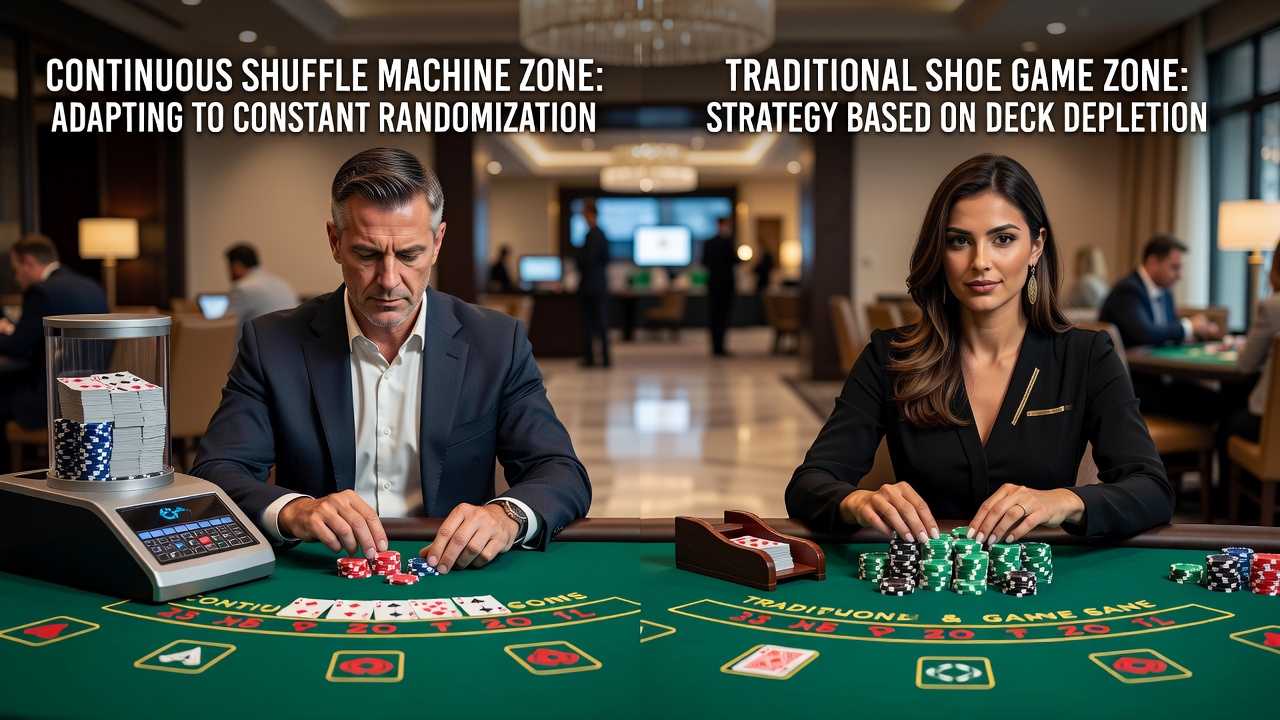
Blackjack Room Dynamics: Recalibrating Bets for Continuous Shuffle Machines and Shoe Games
Blackjack players encounter two primary dealing systems in casino settings, and these systems prompt distinct shifts in how wagers are sized and timed throughout a session. Continuous shuffle machines maintain a constant deck composition by returning discarded cards to the mix after each hand, whereas traditional multi-deck shoes allow the deck to deplete gradually until a cut card triggers a reshuffle. Research from the University of Nevada, Las Vegas Center for Gaming Research shows that these mechanical differences lead players to modify their bet spreads, entry points, and exit strategies based on the equipment in use at each table.
Core Mechanics Behind Each System
Traditional shoe games typically use six or eight decks loaded into a plastic tray, and the cards are dealt until roughly one deck remains before the next shuffle occurs. This structure creates measurable changes in the ratio of high to low cards as play progresses, which some players track through established counting methods. Continuous shuffle machines, by contrast, recycle cards immediately after each round, so the composition resets to a full deck after every hand and eliminates the depletion effect that counting systems rely upon. Data released in July 2026 by the Nevada Gaming Control Board indicated that tables equipped with CSMs now represent over 40 percent of blackjack offerings in major Las Vegas properties, a figure that has risen steadily since 2023.
Observed Adjustments in Betting Patterns
Players who rely on card counting in shoe games often widen their bet spreads when the running count turns strongly positive, increasing wagers to capture expected value from remaining high cards. In CSM environments the same individuals frequently compress those spreads or switch to flat betting because the mathematical edge from tracking disappears. Observers note that many counters move to minimum bets across the board at CSM tables or abandon the table entirely once they confirm the machine is active. Those who continue at CSM tables tend to focus on table minimums and maximums rather than count-based ramps, and they adjust session length accordingly since the per-hand expectation remains closer to the house edge throughout.
Basic strategy players who do not count cards show smaller differences between the two formats, yet even they alter pace and unit size when switching. Some increase their average bet slightly at CSM tables because the absence of a rich deck reduces variance from occasional high-count swings, while others maintain identical sizing and instead shorten or lengthen play duration based on table speed. Casino floor reports compiled by the American Gaming Association reveal that average bet sizes at CSM blackjack tables have remained stable between 2024 and 2026, whereas shoe-game averages fluctuate more widely in response to deck penetration and table limits.

Regional and Regulatory Context
Atlantic City properties, governed by the New Jersey Division of Gaming Enforcement, have seen slower CSM adoption than Nevada, partly because state rules require visible shuffle verification at certain table types. Players crossing between jurisdictions therefore recalibrate expectations when moving from East Coast shoe-heavy rooms to Western venues that favor CSMs for labor efficiency. Australian state regulators, including the Victorian Commission for Gambling and Liquor Regulation, have documented similar patterns in their annual compliance summaries, noting that local players adjust bet timing when CSM tables replace shoes because penetration-based strategies lose relevance. These geographic differences encourage some frequent travelers to maintain separate bankroll allocations for each format rather than applying a single sizing model everywhere.
Practical Examples from Floor Observations
Take one Atlantic City regular who tracked six-deck shoes for several years and then encountered a new bank of CSM tables installed in late 2025. That player reduced the standard 1-to-12 spread used in shoes to a flat 10-unit bet at the CSM tables and shortened average session length by roughly 30 percent to preserve hourly expectation. Another case involved a Las Vegas local who switched entirely to basic strategy at CSM tables while reserving counting efforts for the few remaining shoe games on the Strip. Both adjustments reflect the same underlying principle: wager patterns contract or stabilize when the information advantage from deck composition vanishes.
Conclusion
Blackjack wager recalibration between continuous shuffle machines and traditional shoes follows directly from the mechanical realities of each system. Players who previously varied bets according to count migrate toward flatter structures or different table selections when CSMs appear, while those using basic strategy alone make smaller timing or duration changes. Figures from multiple regulatory bodies and academic monitoring programs confirm that these shifts occur consistently across markets where both formats operate side by side. The resulting patterns remain measurable through routine floor data collection and continue to shape table selection decisions for players who track equipment type before placing opening bets.