Card Counting Adaptations for Spanish 21 and Its Unique Bonus Payouts
Written by Jonas Schröder · Jun 23, 2026
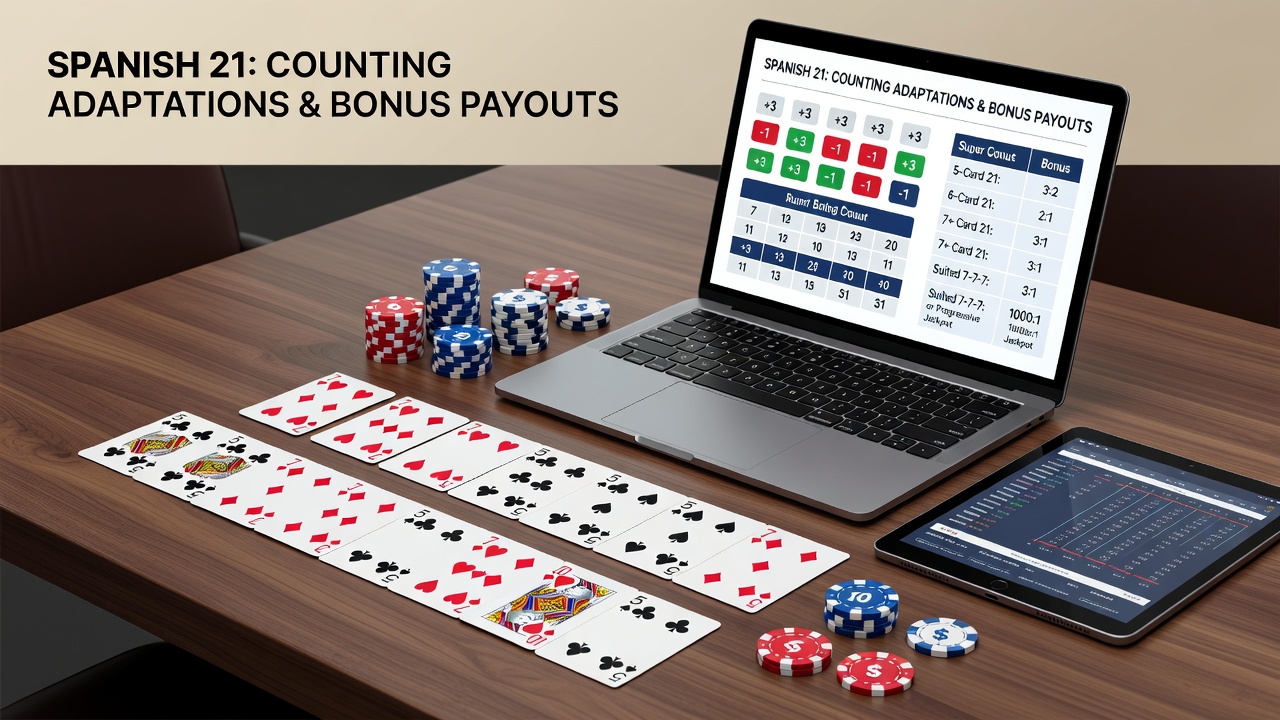
Card Counting Adaptations for Spanish 21 and Its Unique Bonus Payouts
Spanish 21 operates as a blackjack variant that removes all tens from the deck and introduces multiple bonus payouts tied to specific hand combinations, which creates distinct opportunities for adapted counting systems. Players face a 48-card Spanish deck in most versions, and the game pays out for hands such as suited blackjacks, 6-7-8 sequences, and 21-plus-three combinations that standard blackjack does not recognize. Data from multiple casino floors shows these bonuses alter the return-to-player percentage by between 0.4 and 1.2 percent depending on the exact pay table in use.
Deck Composition and Rule Differences
The absence of tens shifts basic strategy frequencies because players encounter more low cards relative to face cards, and this change forces counters to recalibrate running counts from the outset. Spanish 21 also permits doubling on any number of cards and offers surrender options on the first two cards, features that interact directly with bonus triggers and require separate indices within any counting framework. Observers note that late surrender becomes more valuable when the count favors certain bonus hands because it preserves chips for higher-expectation bonus opportunities later in the shoe.
Core Adaptations to Hi-Lo and Other Systems
Standard Hi-Lo assigns values of +1 to cards two through six, zero to sevens through nines, and -1 to tens through aces, yet Spanish 21 requires an extra layer because the removed tens already change the baseline composition. Many practitioners add a secondary count that tracks aces separately while monitoring cards that complete bonus combinations such as sixes, sevens, and eights. Research indicates that a combined count improves accuracy when the player needs to know whether the remaining cards support a 6-7-8 suited payout or a matched 21.
Side-count techniques become essential once the shoe reaches roughly 40 percent penetration, at which point the probability of drawing the exact cards needed for a bonus rises sharply. Those who have studied multi-parameter systems report that maintaining a primary count for the main game and a secondary count for bonus cards allows quicker decisions on insurance, doubling, and surrender without sacrificing speed at the table.
Bonus Payout Structures and Their Impact on Edge
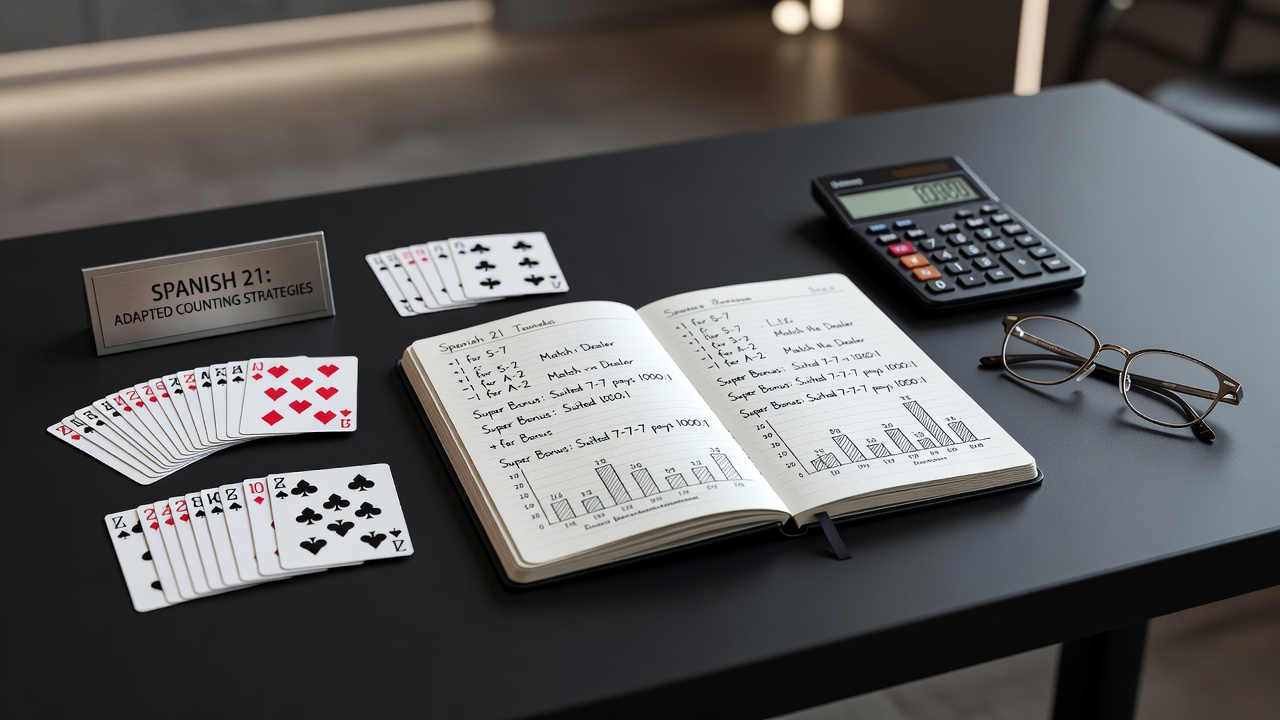
Spanish 21 tables commonly advertise payouts ranging from 3 to 1 for a suited 21 and up to 100 to 1 for three suited sevens, figures that vary by jurisdiction and operator. According to reports compiled by the Nevada Gaming Control Board, these bonus frequencies shift measurably when card removal favors high or low ranks, which means counters must adjust bet sizes not only for the main hand but also for the probability of landing a bonus-eligible combination. A single extra seven or eight remaining in the deck can increase the expected value of certain bonus bets by more than 2 percent, a margin large enough to justify raising the wager before the hand begins.
Figures released in industry analyses show that the 21-plus-three side bet, which pays for three-card poker-style combinations, correlates strongly with the same cards that affect the main-game count, allowing one running total to inform both decisions simultaneously. This overlap reduces the mental load compared with games that require entirely separate side-bet counts.
Practical Table Procedures and June 2026 Developments
Dealers in Spanish 21 games often reveal all hole cards after a bust, which supplies additional information that counters can fold into their running totals before the next round. As of June 2026 several North American properties have introduced electronic bonus displays that update in real time, giving players visual confirmation of which bonus combinations remain live and thereby supporting faster count-based decisions. Regulators in multiple U.S. states require these displays to follow standardized formatting, a change that has made it easier for systematic players to verify payout eligibility without slowing play.
Training materials from professional gambling education organizations emphasize starting with a simplified ace-side count before progressing to full multi-parameter models, a progression that mirrors the approach used in other blackjack variants. Those who have applied these methods over extended sessions find that the added precision offsets the slightly higher variance introduced by the bonus structure.
Bankroll and Session Management Considerations
Because bonus payouts occur less frequently than standard blackjack wins, session bankrolls must accommodate longer stretches between large returns. Data from multi-deck studies shows that optimal bet spreads widen when the count reaches +3 or higher, at which point both the main hand and the bonus opportunities carry positive expectation. Operators have responded by limiting maximum table bets in some markets, a constraint that affects how aggressively counters can scale wagers during favorable segments of the shoe.
Conclusion
Spanish 21 card counting therefore demands a layered approach that accounts for both the altered deck composition and the additional value locked inside specific bonus combinations. Systems built on Hi-Lo with targeted side counts, combined with disciplined bet sizing, allow players to capture the edges created by these unique payouts while respecting table limits and rule variations across different venues. Continued refinement of these methods keeps pace with changes in game presentation and regulatory requirements observed through mid-2026.