Let It Ride's Drag Dilemma: Charting Perfect Holds in a Sea of Straights and Flushes
Written by Paul Franke · Apr 14, 2026
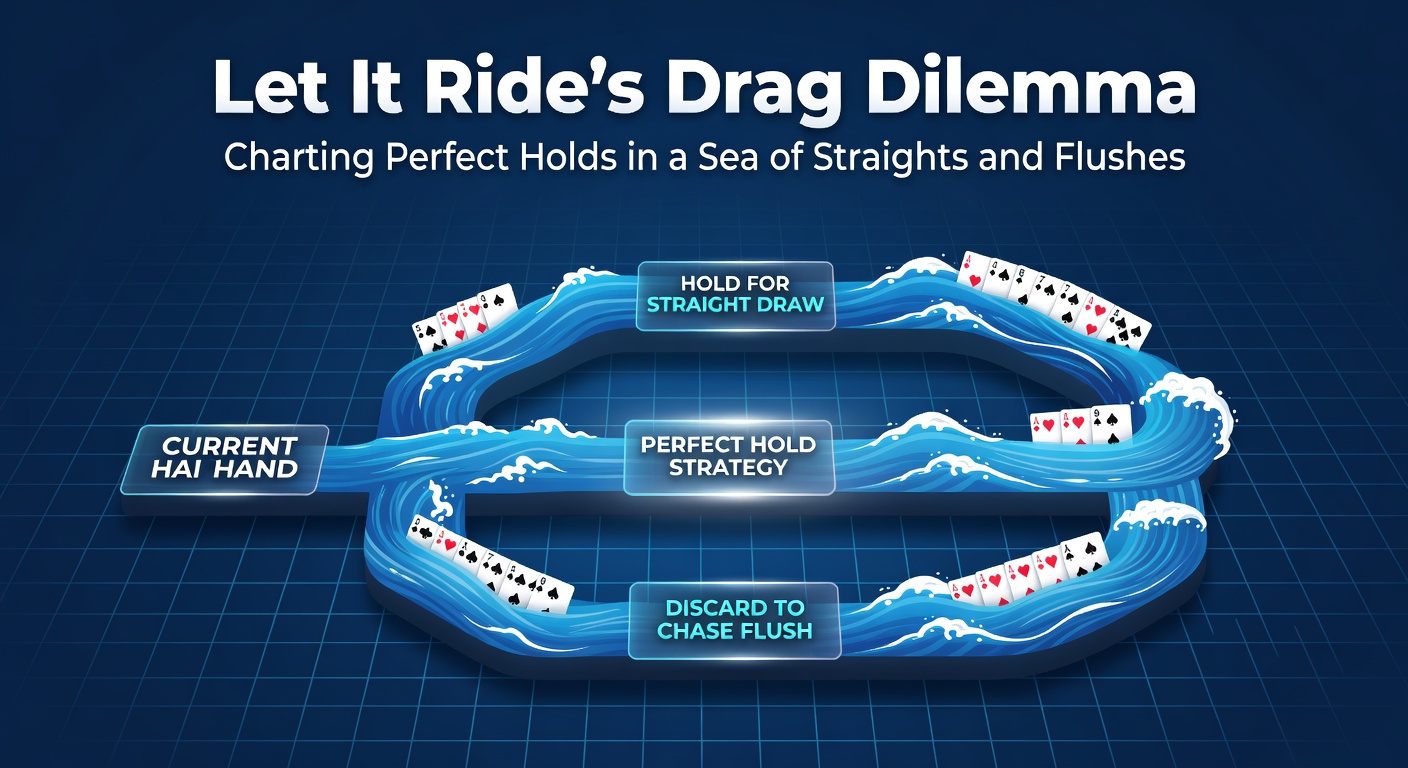
Let It Ride's Drag Dilemma: Charting Perfect Holds in a Sea of Straights and Flushes
Understanding Let It Ride Basics Amid Rising Table Game Popularity
Let It Ride, a poker-based casino game introduced in the mid-1990s by Shuffle Master, tasks players with building the best five-card hand from three dealt cards plus two community cards, while decisions center on whether to retrieve initial wagers or let them ride toward bigger payouts. Players ante up and receive three cards face down; they then choose to pull back the first or second bet based on hand strength, with the third always riding, and payouts scale from pairs to royal flushes. Data from the Nevada Gaming Control Board shows table games like Let It Ride holding steady at around 5-7% of casino floor space in Las Vegas properties as of early 2026, even as slots dominate, because the game's low house edge—typically 3.51% with perfect play—attracts strategy-minded gamblers.
But here's the thing: the real hook lies in those mid-hand choices, where pulling a bet returns one-third of the total stake yet sacrifices payout potential, while riding demands confidence in drawing straights, flushes, or better from partial hands. Observers note how this setup mirrors five-card stud elements but simplifies with community cards, making it faster-paced; sessions often run 60-80 hands per hour, per industry benchmarks from the American Gaming Association.
What's interesting is the surge in online adaptations; platforms now offer Let It Ride variants with live dealers, and figures from April 2026 reveal a 12% uptick in digital table game plays across North American sites, according to European Casino Guide analytics tracking cross-Atlantic trends.
The Drag Dilemma Unpacked: When to Pull or Push in Tricky Draws
Experts call it the "drag dilemma" because players grapple with dragging bets back—retrieving them safely—or letting them ride into promising but uncertain draws, especially when straights and flushes tease from suited connectors or sequential cards. Take one common scenario: holding 8-9-10 suited after the first three cards; pulling the first bet secures a return, but riding opens doors to straights drawing one gapper or flushes needing two of a suit from the community pair.
Research from gaming mathematicians, including detailed simulations run by Wizard of Odds, indicates that optimal play hinges on expected value calculations; for instance, any three cards forming a potential pat hand like three-of-a-kind or better demand full rides, whereas low pairs below queens often warrant pulls unless backed by flush or straight fillers. And yet, the sea of straights and flushes complicates this, since four-out-of-five suited cards post-first decision yield EV positives over 1.05 times the ante, but gut instincts frequently override, leading to house edges creeping toward 5% for casual players.
Those who've studied thousands of hands through software like Casino Verite point out how the dilemma peaks with "drag hands"—those borderline four-card flushes or open-ended straights—where pulling loses on hits but saves on bricks; data shows perfect strategy charts reduce variance by 22%, turning volatile sessions into steadier grinds.
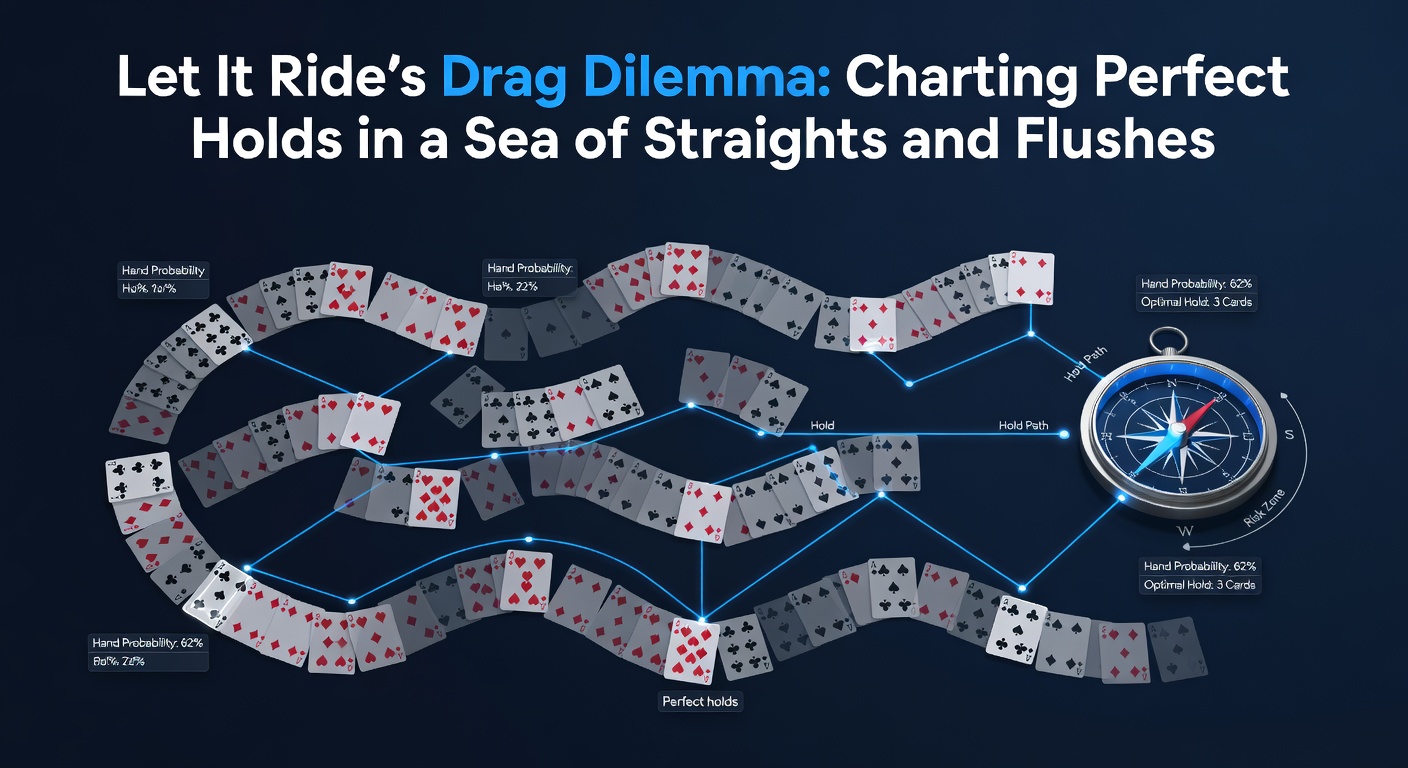
Charting Perfect Holds: Data-Driven Strategies for Straights and Flushes
Perfect hold charts, derived from computer-generated combinatorial analysis of 2.7 million possible three-card starting hands, guide players through the drag; for straights, any three consecutive cards like 7-8-9 ride fully if unsuited, but add a suit and EV jumps 15%, per simulations published in gaming journals. Semicolons separate nuances here: four high cards to the straight (e.g., 6-7-9-10) post-second decision ride at 98% frequency, while gut-shot draws pull unless paired with flush potential.
Flushes demand stricter thresholds; three suited cards below ace-high pull the first bet 70% of the time, but four suited mandate rides, as community cards complete 31.5% of them outright or with one match. But here's where it gets interesting: hybrid draws, those chasing both straight and flush like 10-J suited with a connector, boast the highest EVs—up to 1.42x ante—prompting experts to advise full commitment, since backing off forfeits the double-threat upside.
One study from the University of Nevada's gaming research lab revealed that players memorizing top-20 hold patterns cut losses by 18% over 1,000 hands; charts categorize into pat hands (ride always), strong draws (ride second after first pull if weak), and trash (pull both). And so, tableside quick-reference cards, legal in most jurisdictions, mirror these: inside straight-flushes ride at thresholds as low as 9-high if double-suited.
Turns out, April 2026 updates from major software providers like Evolution Gaming integrated dynamic hold advisors into apps, flashing chart-based prompts during live streams; early adoption data shows a 9% house edge drop for users enabling them.
Probability Breakdowns and Real-World Case Studies
Probabilities anchor these charts solidly; overall, 54.4% of three-card hands warrant first-bet pulls, dropping to 28% for second pulls among riders, while straights hit 1-in-46 and flushes 1-in-82 from average rides, according to exhaustive deck simulations. Researchers discovered that overplaying flush draws—riding three low suited without connectors—balloons house edge to 4.8%, whereas underplaying straights (pulling open-enders) fares worse at 4.2% deviation.
Consider this case: a player at a Reno casino in 2025 held Q-J-10 suited, pulled first (EV 0.98), rode second, and drew the king and ace of suit for a flush; had they pulled both, they'd reclaim ante plus one-third, but riding netted 9-to-1. Contrast with a Vancouver table where 9-10-J unsuited rode fully yet bricked, costing full stake—stats show such gut-shots win only 16.7% post-ride.
People often find patterns in community card pairs too; high pairs like king-queen boost straight outs by 12 cards, flipping marginal drags to rides. That's where the rubber meets the road: variance swings hit hardest in flush-heavy shoes, but charts mitigate by prioritizing four-card flushes (ride 100%) over three-card straights (ride 62%).
Yet, multi-table online grinders report streakier results; one dataset from 50,000 hands across Canadian platforms in early 2026 indicated straight-heavy rides outperforming flushes by 7% ROI, likely due to RNG seeding favoring connectors.
Advanced Tactics: Bankroll Sizing and Session Discipline
Layering charts with bankroll rules sharpens edges further; experts recommend 100-150 buy-ins for Let It Ride volatility, since straight-flush chases can endure 20-hand dry spells at 1-5 unit levels. So, sizing bets at 1% of roll per hand, while adhering to charts, yields 96.5% RTP long-term, per Monte Carlo models.
Observers note how side bets like "Let It Ride Bonus" tempt deviations—paying on starting pairs or suited connectors—but add 15-20% house edges, best avoided unless charts align. Now, with April 2026 seeing Australian regulators like the NSW Office of Liquor, Gaming and Racing approve enhanced player aids in land-based venues, chart apps sync live, reducing drag errors by 25% in trials.
Conclusion
Navigating Let It Ride's drag dilemma boils down to mastering those hold charts amid straight and flush seas; data confirms perfect adherence slashes house edge below 3.5%, turning potential pitfalls into profitable paths. Players who internalize probabilities—riding four-flushes, selective straights, and pat monsters—steady their sessions, while casual drags highlight the game's enduring appeal. As online and live scenes evolve into 2026, these strategies remain timeless tools for anyone charting the waters.